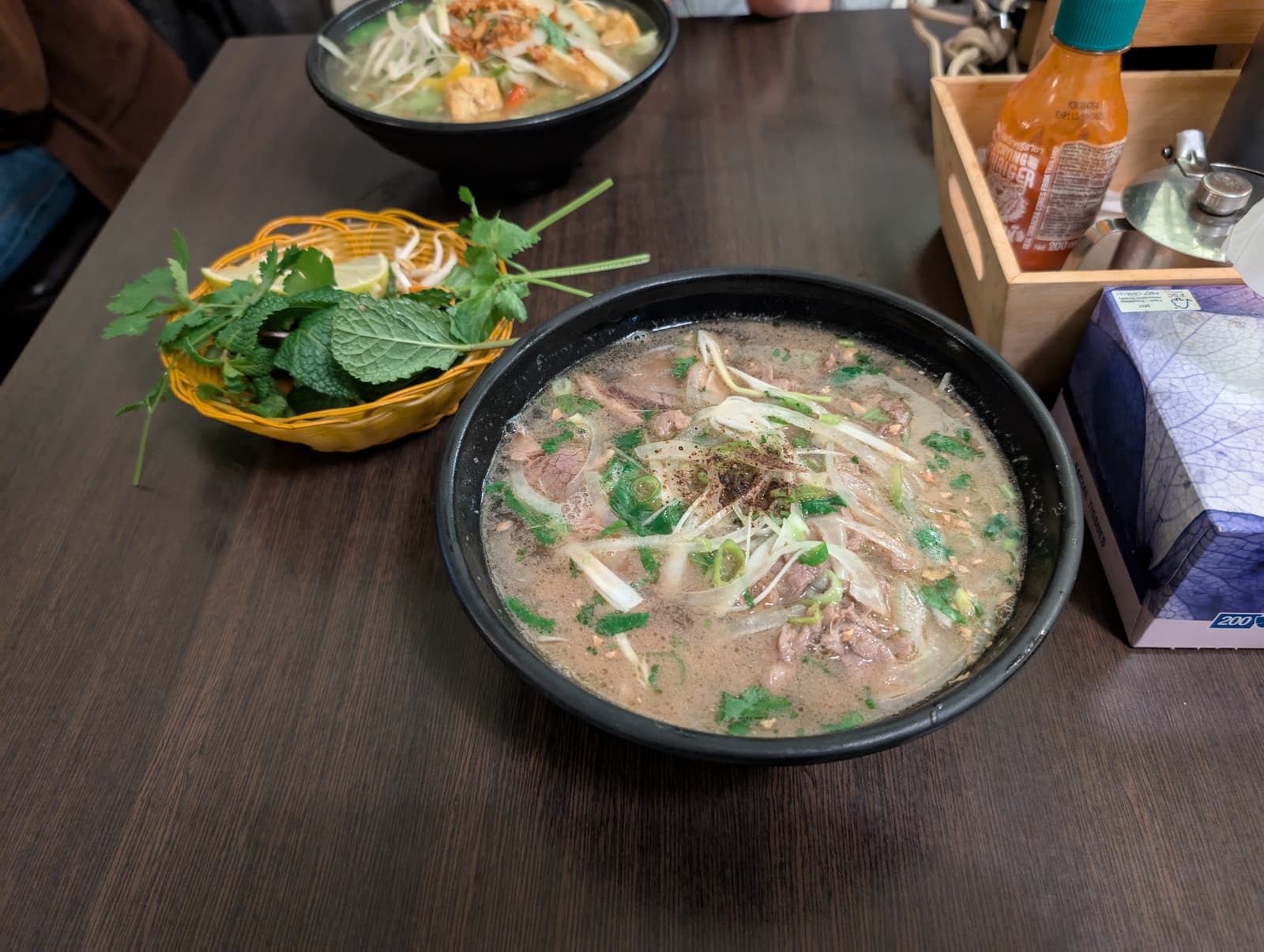
Hanoi is arguably the street food capital of Vietnam. Many of the best places are tiny family businesses that have made one dish for decades, on a stretch of pavement with low plastic stools. The menu is often a single word above the door — and that is all you need.
What to eat
Pho
Hanoi’s gift to the world: rice noodles in a clear, slow-simmered broth, with beef (phở bò) or chicken (phở gà). Hanoi-style pho is usually simpler than versions abroad — fewer herbs on the side, more focus on the broth. Traditionally a breakfast dish.
Bun cha
Grilled pork patties and slices served in a sweet-sour dipping broth, with rice vermicelli and a basket of herbs; often with crisp spring rolls (nem rán). A lunchtime dish, smoky and addictive.
Banh cuon
Silky steamed rice rolls filled with pork and wood-ear mushroom, topped with fried shallots and dipped in fish sauce.
Cha ca
Turmeric-marinated fish fried at the table with masses of dill and spring onion, eaten with noodles, peanuts and shrimp paste — the speciality of the street named after it.
Banh mi, xoi and more
The baguette sandwich, sticky rice (xôi) with toppings, crab noodle soup (bún riêu), sweet chè desserts — and seasonal treats such as green-rice (cốm) in autumn.
Egg coffee and bia hoi
Egg coffee (cà phê trứng) — strong Vietnamese coffee topped with a thick foam of egg yolk whipped with sugar — is a Hanoi invention; try it in one of the old cafés of the Old Quarter. Bia hoi is fresh, light draught beer brewed daily and drunk on the street corners of the Old Quarter around Ta Hien street.
How street food works
- One dish per shop: sit down and the dish arrives; point if needed.
- Timing: many stalls open only for breakfast, lunch or the evening and close when sold out.
- Prices: usually low and fixed; where there is no menu, ask first.
- Hygiene: choose busy places with a fast turnover where food is cooked in front of you.
- Vegetarian: look for chay (vegetarian) restaurants, often near pagodas, or join a vegan food tour.
Why take a food tour?
A guide takes you to the specialists, orders the right things, explains what you are eating and keeps the pace. Hanoi’s top food tours have thousands of reviews and cost less than a single restaurant meal in many countries. Book one on your first evening and you will know where to go for the rest of the stay. Many include a stop on Train Street when it is permitted.
Cooking classes and coffee workshops
Cooking classes start with a market visit — sometimes at Dong Xuan Market — and end with lunch or dinner. Coffee workshops teach egg, salt and coconut coffee. Both are excellent on a rainy afternoon.
Where to stay near the food? The Old Quarter, of course.